

iHome delivers innovative solutions for simplifying modern lifestyles, specializing in alarm clocks with diverse features like Bluetooth and radio connectivity.
These clocks offer customizable wake-up experiences, blending seamlessly with smartphones and providing convenient charging options for daily use.
iHome’s product range includes models with wireless charging, USB ports, and FM radio, catering to varied user preferences and needs.
Utilizing an iHome alarm clock enhances your morning routine, offering a blend of functionality, convenience, and personalized audio options.
Overview of iHome and its Products
iHome has established itself as a leading innovator in the audio and lifestyle product market, particularly renowned for its diverse range of alarm clocks. Beginning with iPhone and iPod docks, iHome expanded to encompass Bluetooth speakers, wireless charging stations, and smart home devices.
Their product line features a wide array of alarm clocks, from basic digital models to advanced units boasting features like FM radio, USB charging ports, and wireless power delivery. Models like the iBTW112 offer fast wireless charging alongside traditional alarm functionalities.
iHome consistently focuses on integrating modern technology into everyday essentials, providing users with convenient and customizable experiences. The company’s commitment to quality and innovation has solidified its position as a trusted brand for consumers seeking reliable and feature-rich alarm clock solutions.
Why Use an iHome Alarm Clock?
iHome alarm clocks offer a significant upgrade to traditional wake-up methods, providing a customizable and convenient start to your day. Beyond simply telling time, these clocks integrate seamlessly with modern lifestyles, offering Bluetooth connectivity for audio playback from your smartphone or tablet.
Many models include built-in FM radio, allowing you to wake to your favorite stations. The inclusion of USB charging ports and wireless charging capabilities eliminates bedside clutter and keeps your devices powered up.
iHome clocks are designed for ease of use, even with their advanced features, and often include helpful sleep timers and snooze functions. They represent a smart investment for anyone seeking a more enjoyable and efficient morning routine.

Setting Up Your iHome Alarm Clock
Initial setup involves powering the device and configuring essential settings like time and date for accurate operation and personalized alarm scheduling.
Follow the manual’s instructions to ensure proper functionality and enjoy the clock’s full range of features immediately.
Initial Setup and Powering On
To begin, carefully unpack your iHome alarm clock and remove all packaging materials. Locate the power adapter included in the box and connect it to the designated power port on the back of the unit.
Plug the adapter into a standard wall outlet. The clock should automatically power on, displaying a welcome screen or prompting you to begin the initial setup process.
If the clock doesn’t power on, double-check the power connection at both the clock and the wall outlet. Some models may have a separate power button; if so, press it to activate the device.
Ensure the power source is functioning correctly by testing it with another device. Once powered on, the display will likely flash, indicating it’s ready for time and date configuration.
Refer to the user manual for specific instructions related to your iHome model.
Setting the Time
To set the time, typically you’ll need to press and hold the “Time Set” or similar button for a few seconds until the hour display begins to flash. Use the “Hour” and “Minute” buttons to adjust the current time accordingly.
Hold these buttons for faster adjustments. Once the correct time is displayed, press the “Time Set” button again to confirm. The display will stop flashing, indicating the time is saved.
Some iHome models offer automatic time setting via Bluetooth connection to a smartphone or internet connection.
Consult your user manual for details on enabling this feature. Ensure the time is accurate, as it’s crucial for alarm functionality.
Double-check AM/PM settings for correct time display.
Manual Time Setting
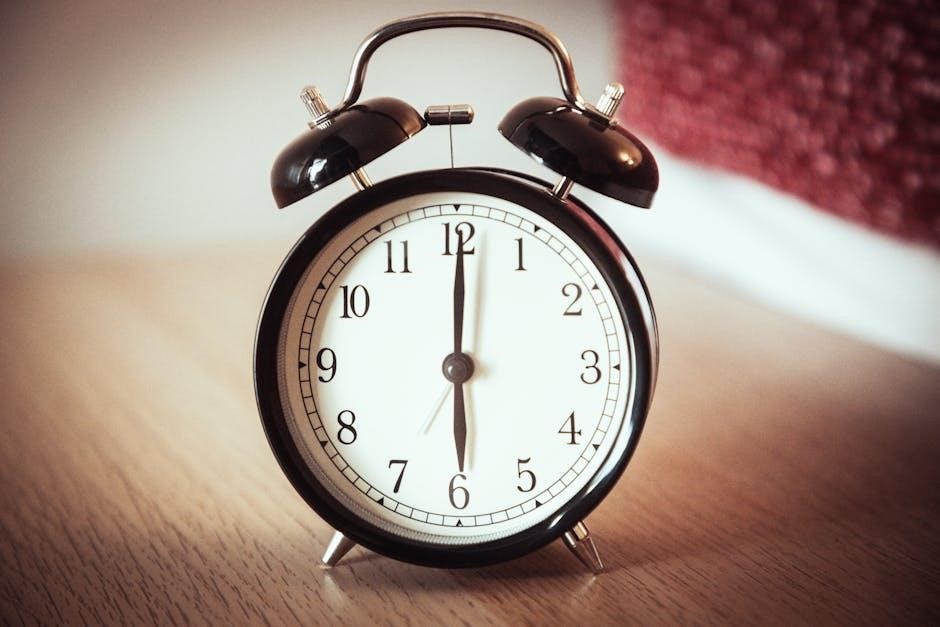
For manual time setting, locate the “Time Set” button – often requiring a press and hold for two seconds until the hour digits flash. Utilize the directional or numbered buttons to increment the hour.
Repeat the process for minute adjustment, ensuring correct AM or PM selection. A beep sound usually confirms each setting change.
Pressing “Time Set” again finalizes the process, stopping the flashing and saving your input.
If the clock lacks dedicated buttons, a combination of volume or radio tuning controls might serve as hour/minute adjusters.
Always refer to your specific model’s manual for precise button assignments.
Automatic Time Setting (if applicable)
If your iHome clock supports automatic time setting, it typically receives signals from a radio transmitter (WWVB) or utilizes internet connectivity. Ensure the clock is placed near a window for optimal signal reception.
Activate the automatic setting mode through the clock’s menu, often accessible by pressing and holding a designated button.
The clock will then search for and synchronize with the time signal, displaying a reception indicator during the process.
This feature eliminates manual adjustments for daylight saving time in supported regions.
Consult your model’s manual for specific instructions and troubleshooting tips regarding automatic time synchronization.
Setting the Date
To set the date on your iHome alarm clock, access the date setting mode through the clock’s menu system. This is often initiated by pressing and holding the ‘Time Set’ or similar button.
Once in date setting mode, the year display will likely flash first. Use the hour/minute buttons to adjust the year to the correct value.
Subsequently, proceed to set the month and day, navigating through the options using the same buttons.
Confirm each selection by pressing the ‘Time Set’ button again to save the date.
Refer to your specific model’s manual for detailed instructions, as the process can vary slightly.
Alarm Functionality
iHome alarm clocks allow setting multiple alarms, offering diverse sound options and adjustable volume levels for a personalized wake-up experience.
The convenient snooze function provides extra sleep, while intuitive controls simplify alarm management for daily use.
Setting the Alarm
Setting the alarm on your iHome clock is straightforward, though specifics vary by model. Generally, you’ll need to press and hold the ‘Time Set/Sleep’ button for a few seconds until the display flashes.
Then, use the hour and minute buttons to adjust the desired alarm time. Confirm your selection, and the alarm will be activated. Many iHome clocks support setting multiple alarms, ideal for different schedules or reminders.
Consult your specific model’s manual for detailed instructions, as button layouts and procedures can differ. Remember to verify the AM/PM setting to ensure accurate alarm activation each morning.
Setting Multiple Alarms
iHome alarm clocks often allow for setting multiple alarms, a useful feature for varied schedules. Typically, after setting your first alarm, you’ll press a dedicated ‘Alarm Set’ or similar button to save it.
To add another, repeat the process – press and hold the ‘Time Set/Sleep’ button, adjust the time, and then save. Some models utilize a numbered alarm selection, letting you choose which alarm to activate or deactivate.
Refer to your user manual for specific instructions, as the method varies. Utilizing multiple alarms ensures you won’t miss important appointments or commitments, offering enhanced scheduling flexibility.
Alarm Sounds and Volume Control
iHome alarm clocks provide a selection of alarm sounds, ranging from traditional beeps to radio stations or even your personalized playlists via Bluetooth. To change the sound, navigate the alarm settings menu, usually accessed by pressing and holding the ‘Alarm Set’ button.
Cycle through the available options until you find your preference. Volume control is typically managed using dedicated ‘Volume Up’ and ‘Volume Down’ buttons on the clock’s exterior.
Adjust the volume to a comfortable level, ensuring it’s loud enough to wake you but not jarring. Consult your specific model’s manual for detailed instructions.
Snooze Function
iHome alarm clocks feature a convenient snooze function, allowing for a few extra minutes of sleep before waking fully. Typically, pressing the large ‘Snooze’ button on top of the clock will temporarily silence the alarm.
The alarm will then reactivate after a pre-set interval, usually around nine minutes, though some models allow customization of this snooze duration. Repeatedly pressing the snooze button will continue to delay the alarm.
Be mindful of excessive snoozing, as it can disrupt your sleep cycle. Refer to your specific iHome model’s manual for detailed snooze function settings.
Bluetooth Connectivity
iHome alarm clocks with Bluetooth enable wireless audio streaming from smartphones or tablets, offering a versatile wake-up experience.
Pairing is simple, allowing you to enjoy personalized playlists or podcasts instead of traditional alarm sounds.
Seamlessly connect and enjoy your favorite audio content with this convenient feature.
Pairing a Bluetooth Device
To initiate Bluetooth pairing on your iHome alarm clock, first ensure the clock is powered on and in pairing mode – typically activated by pressing and holding the Bluetooth button until an indicator light flashes.
Next, on your smartphone or tablet, navigate to the Bluetooth settings menu and enable Bluetooth discovery.
The iHome clock should appear in the list of available devices; select it to begin the pairing process.
You may be prompted to enter a pairing code (often “0000” if required), and once successfully connected, the indicator light on the clock will usually become solid.
Remember to keep the devices within close proximity during pairing for a stable connection.
Using Bluetooth for Audio Playback
Once your Bluetooth device is paired with the iHome alarm clock, you can enjoy wireless audio playback directly through the clock’s speakers.
Begin playing music or any audio content on your paired smartphone or tablet; the sound will automatically stream to the iHome clock.
Use the volume controls on both your Bluetooth device and the iHome clock to adjust the audio level to your preference.
Some iHome models feature controls on the clock itself to pause, play, or skip tracks, offering convenient audio management.
Ensure a stable Bluetooth connection for uninterrupted listening pleasure.

Radio Functionality
iHome alarm clocks with radio capabilities allow tuning into FM stations for wake-up sounds or general listening enjoyment.
Users can scan for available stations and save preferred frequencies as presets for quick access each morning.
Enjoy a traditional radio experience alongside modern Bluetooth connectivity within a single, convenient device.
Tuning into FM Radio
To tune into FM radio on your iHome alarm clock, begin by ensuring the unit is powered on and in radio mode. Typically, this involves pressing a dedicated “Radio” or “Source” button until FM is selected.
Once in FM mode, use the tuning buttons – often marked with up and down arrows or plus and minus symbols – to scan through available frequencies. The clock will automatically stop at the next available station.
Continue pressing the tuning buttons to cycle through different stations. For optimal reception, adjust the antenna position. Some models feature an auto-scan function that automatically searches for and saves available stations.
Refer to your specific model’s manual for detailed instructions, as button layouts may vary.
Saving Radio Presets
Saving radio presets allows quick access to your favorite FM stations. After tuning into a desired station, locate the “Preset” or “Memory” button on your iHome clock.
Press and hold the preset button – often numbered 1 through 6 – until the station is saved. A confirmation beep or visual indicator usually confirms successful saving.
Repeat this process for other stations, assigning each to a different preset number. To access a saved station, briefly press the corresponding preset button.
Some models allow overwriting existing presets. Consult your user manual for specific instructions related to your iHome model’s preset functionality.

Advanced Features
iHome alarm clocks often include wireless charging pads, USB ports for device charging, and a sleep timer function for customizable relaxation before bedtime.
These features enhance convenience, consolidating charging and sleep management into one compact and user-friendly device.
Wireless Charging (if applicable)
iHome alarm clocks with wireless charging offer a convenient way to power up your Qi-enabled smartphones and devices. Simply place your compatible device on the designated charging pad on top of the clock.
Ensure your device is properly aligned with the charging area for optimal power transfer. A charging indicator light will typically illuminate to confirm successful wireless charging.
This feature eliminates the need for cables, reducing clutter and providing a streamlined charging experience. Note that charging speed may vary depending on your device and the clock’s power output. Always refer to your device’s manual for wireless charging compatibility and recommendations.
Avoid placing metallic objects between your device and the charging pad, as they can interfere with the charging process.
USB Charging Port
Many iHome alarm clocks feature a built-in USB charging port, providing a convenient way to charge your smartphones, tablets, or other USB-powered devices. Locate the USB port, typically found on the back or side of the clock.
Connect your device to the USB port using a standard USB cable. Charging will commence automatically, and your device will draw power from the clock. The USB port often delivers a standard 5V/1A output, suitable for most mobile devices.
This feature allows you to charge your devices overnight, ensuring they are fully powered for the day ahead. It’s a practical addition, minimizing the need for separate wall chargers and keeping your bedside table organized.
Sleep Timer Function
The iHome alarm clock’s sleep timer allows you to fall asleep to your preferred audio source – radio or Bluetooth – and have it automatically turn off after a set duration. Access the sleep timer function through the clock’s menu or dedicated button, if available.
Typically, you can set the timer for various intervals, such as 15, 30, 60, or 90 minutes. Once activated, the audio will gradually fade out, creating a relaxing atmosphere. This feature is ideal for those who dislike falling asleep with audio playing all night.
Consult your specific model’s manual for detailed instructions on activating and customizing the sleep timer settings.

Troubleshooting Common Issues
Common problems include alarms failing to sound, Bluetooth connectivity issues, and display malfunctions; consulting the user manual is often the first step to resolution.
Ensure proper power, settings, and device pairing for optimal performance and a smooth user experience with your iHome clock.
Alarm Not Sounding
If your iHome alarm isn’t sounding, first verify the alarm is actually set and enabled within the clock’s settings. Double-check the volume level; it may be muted or set too low to hear. Ensure the clock is receiving power – a loose connection or depleted batteries can prevent operation.
Confirm you haven’t accidentally activated sleep mode or a timer that overrides the alarm. For Bluetooth models, ensure your paired device isn’t interfering with the alarm function. If using the radio as an alarm, confirm a station is properly tuned and saved as a preset. Refer to your specific model’s manual for detailed troubleshooting steps, as procedures can vary.
Finally, a factory reset (consult the manual) can sometimes resolve software glitches causing alarm failures.
Bluetooth Connection Problems
Experiencing Bluetooth issues with your iHome clock? Begin by ensuring Bluetooth is enabled on both your clock and the device you’re trying to pair. Verify your device is within range – typically within 30 feet – and free from obstructions. Try forgetting the iHome clock on your device and re-pairing it from scratch.
Check for interference from other wireless devices. Restarting both your iHome clock and your Bluetooth device can often resolve connection glitches. Confirm your iHome’s firmware is up-to-date, as updates frequently include Bluetooth improvements. Consult your model’s manual for specific pairing instructions and troubleshooting tips.
Display Issues
If your iHome alarm clock display is malfunctioning, first check the brightness settings – it may be dimmed too low. Ensure the clock is properly plugged in and receiving power; a loose connection can cause flickering or a blank screen. Try unplugging the clock for 60 seconds, then plugging it back in to reset it.
If the display remains problematic, consult your user manual for specific troubleshooting steps related to your model. Some clocks have a display reset function. If issues persist, contact iHome customer support for assistance, providing your model number for efficient help.
Care and Maintenance
Regularly clean your iHome alarm clock with a soft, dry cloth to prevent dust buildup. Replace batteries promptly when low, if applicable, for optimal performance.
Cleaning Your iHome Alarm Clock
To ensure the longevity and optimal performance of your iHome alarm clock, regular cleaning is essential. Always disconnect the clock from the power source before commencing any cleaning procedures. Use a soft, dry, lint-free cloth to gently wipe down the exterior surfaces of the clock.
Avoid using abrasive cleaners, solvents, or excessive moisture, as these can damage the finish or internal components. For stubborn marks or grime, lightly dampen the cloth with water and wring it out thoroughly before wiping. Pay particular attention to the display screen and control buttons, ensuring they are free from dust and fingerprints.
Do not attempt to disassemble the clock for cleaning purposes, as this may void the warranty and potentially cause damage. Regularly cleaning your iHome alarm clock will help maintain its appearance and functionality for years to come.
Battery Replacement (if applicable)
If your iHome alarm clock utilizes a battery backup, replacement is necessary when the clock loses time during power outages. Locate the battery compartment, typically on the rear or bottom of the unit. Open the compartment cover, usually by sliding or releasing a latch.
Remove the old batteries, noting the correct polarity (+ and -) indicated inside the compartment. Insert new batteries of the same type and size, ensuring proper alignment. Close the battery compartment cover securely. Reset the time and any programmed settings after replacing the batteries.
Dispose of used batteries responsibly, following local regulations for battery recycling. Regular battery checks ensure your alarm clock maintains accurate timekeeping and alarm functionality.